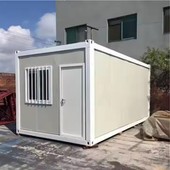
Industry analysts predict that as policies promoting green and prefabricated construction continue to advance, the systems for the standardized production and application of integrated housing will become increasingly mature. Leveraging advantages such as rapid deployment, high mobility, and full-lifecycle reusability, these types of structures are set to further expand into niche markets-including rural tourism, overseas project camps, and industrial park support facilities-thereby becoming a core category in the construction industry's transition toward lightweight and sustainable development.
In recent years, the industrialization of prefabricated construction has accelerated. Thanks to their distinct advantages-specifically factory prefabrication, on-site assembly, and the ability to be dismantled and relocated-modular integrated housing units have been widely deployed across diverse settings, including construction sites, tourism and hospitality accommodations, and emergency relief centers. Consequently, establishing standardized and streamlined processes for their on-site deployment and utilization has become a consensus within the industry.

Adhering to industry construction and production standards, the operational logic of integrated housing across its lifecycle is both simple and efficient. Once product modules are prefabricated in the factory and pass comprehensive quality inspections, the manufacturer transports them to the project site and dispatches technical experts to provide installation guidance. Construction personnel can assemble the entire structure quickly using simple procedures like bolting and spot welding; once utility connections (water and electricity) are completed,

the housing is ready for immediate use. Unlike traditional brick-and-concrete buildings-which are permanently fixed and immovable-integrated housing is fully demountable and reusable. Should the project site require relocation or redevelopment, the original manufacturer can handle the dismantling, transport, and reassembly at a new location. This reassembly process eliminates the need for extensive civil engineering work, thereby significantly reducing renovation costs and material waste, while highlighting the technology's clear advantages in environmental protection and low-carbon, sustainable development.

Integrated housing has already established mature solutions for specific application sectors. In the engineering and construction industry, temporary on-site dormitories can be rapidly erected following basic site leveling and foundation work, drastically shortening the construction timeline for temporary facilities. In the tourism accommodation sector-particularly for boutique homestays and vacation homes-clients can collaborate with manufacturers during the

customization phase to have interior fit-outs and functional layouts completed at the factory; once assembled on-site, the facilities can open for business immediately, effectively supporting "asset-light" investment strategies for tourism projects. During emergencies such as natural disasters or relief operations, the rapid assembly and quick delivery capabilities of modular products effectively bridge the gap in emergency housing supply, making them a preferred solution for supporting domestic emergency infrastructure.