

Yo! I'm a supplier of prefab capsule hotels, and I often get asked if these nifty little hotels can work in different climates. Well, let's dive right into it and find out.
Understanding the Basics of Prefab Capsule Hotels
First off, what exactly are prefab capsule hotels? They're basically pre - fabricated, self - contained units that can be quickly assembled and installed. Think of them as mini - hotels in a box. They're super convenient, cost - effective, and can be set up almost anywhere.

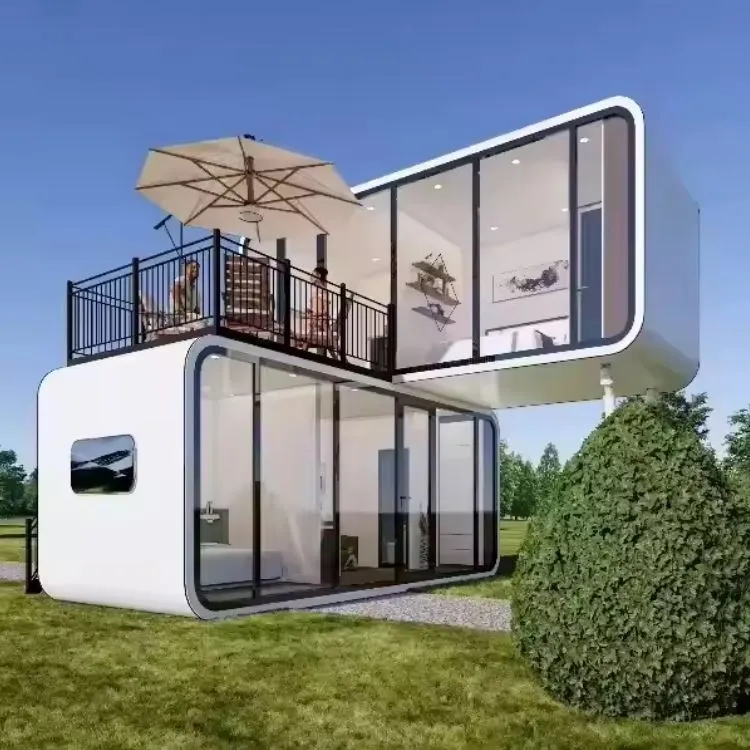
One of our popular models is the Apple Cabin Prefab. It's a sleek and modern design that offers a cozy space for guests. Another great option is the Modular Office with Bathroom, which can also be used as a capsule hotel unit, providing all the essential amenities in a compact space. And for those who need a bit more room, the Big Space Capsule House is the way to go.
Dealing with Hot Climates
When it comes to hot climates, the key is to keep the interior of the capsule hotel cool. Our prefab capsule hotels are designed with insulation in mind. High - quality insulation materials are used to prevent the heat from seeping in. This helps to maintain a comfortable temperature inside, even when it's scorching hot outside.
We also incorporate ventilation systems. These systems can be natural or mechanical. Natural ventilation uses the principles of air movement, like the stack effect, to bring in fresh air and expel hot air. Mechanical ventilation, on the other hand, uses fans and blowers to circulate air. This not only keeps the air fresh but also helps in reducing humidity, which can be a real problem in hot and humid climates.
For example, in desert areas where the temperature can soar during the day, our prefab capsule hotels can be equipped with reflective coatings on the exterior. These coatings reflect sunlight, reducing the amount of heat absorbed by the structure. And let's not forget about shading devices. We can add awnings or overhangs to protect the windows and walls from direct sunlight.
Surviving Cold Climates
Cold climates present a different set of challenges. The main goal here is to keep the heat inside. Our prefab capsule hotels are built with thick insulation to minimize heat loss. The insulation acts as a barrier, preventing the warm air from escaping and the cold air from getting in.
Heating systems are also a must. We offer a variety of heating options, such as electric heaters, gas heaters, or even under - floor heating. These systems can be controlled easily, allowing guests to adjust the temperature according to their comfort level.
In areas with heavy snowfall, the structural design of the capsule hotel is crucial. We design our units with a sloped roof to prevent snow from accumulating. This reduces the risk of structural damage due to the weight of the snow. And to make sure the water pipes don't freeze, we use insulation around the pipes and, in some cases, heat - tracing cables.
Humid and Tropical Climates
Humid and tropical climates are a combination of heat and moisture. In addition to the cooling measures mentioned earlier, we need to address the issue of humidity. Mold and mildew can be a big problem in these climates. To combat this, we use moisture - resistant materials in the construction of the capsule hotels.
The ventilation systems play an even more important role here. They help to remove the excess moisture from the air. We can also install dehumidifiers in the units to keep the humidity levels in check. And for the exterior, we use materials that are resistant to corrosion and rot, ensuring the longevity of the prefab capsule hotel.
Dry and Arid Climates
Dry and arid climates have their own unique characteristics. Dust and sandstorms can be a common occurrence. To protect the capsule hotel from these elements, we use sealed windows and doors. This prevents dust from entering the interior.
The exterior of the unit can be treated with a special coating to make it more resistant to abrasion. And since water is scarce in these areas, we can design the water systems to be more efficient, using techniques like water recycling.
Coastal Climates
Coastal climates are known for their high salt content in the air. This can cause corrosion to metal parts of the prefab capsule hotel. We use corrosion - resistant materials, such as stainless steel or galvanized steel, in the construction.
The units are also designed to withstand strong winds and storms. We reinforce the structure and anchor it properly to the ground to ensure its stability. And of course, the windows and doors are sealed tightly to prevent water from entering during heavy rains.
Conclusion
So, can a prefab capsule hotel be used in different climates? The answer is a resounding yes! With the right design, materials, and systems, our prefab capsule hotels can adapt to a wide range of climates. Whether it's the sweltering heat of the desert, the freezing cold of the mountains, or the humid tropics, we've got you covered.
If you're interested in purchasing a prefab capsule hotel for your project, whether it's a tourist destination, a business park, or an event venue, don't hesitate to reach out. We're here to help you find the perfect solution for your specific needs. Let's start a conversation about how our prefab capsule hotels can work for you in your unique climate.
References
- Building Science Corporation. (2023). Climate - specific design considerations for prefabricated structures.
- International Code Council. (2022). Energy efficiency standards for different climate zones.
- National Association of Home Builders. (2021). Best practices for building in coastal climates.