

If you're in the market for office space for a growing team, a temporary project, or even a remote work hub, you've probably run into indoor modular offices. I've been in the modular office supply game for years, and one question I get asked all the time is: "What's their resale value?" It's a fair question-no one wants to drop a chunk of change on office space that loses its value faster than a beat-up laptop. Today, I'm breaking down how modular office resale works, what factors affect it, and how to make sure you get the most bang for your buck if you decide to sell or down the line.
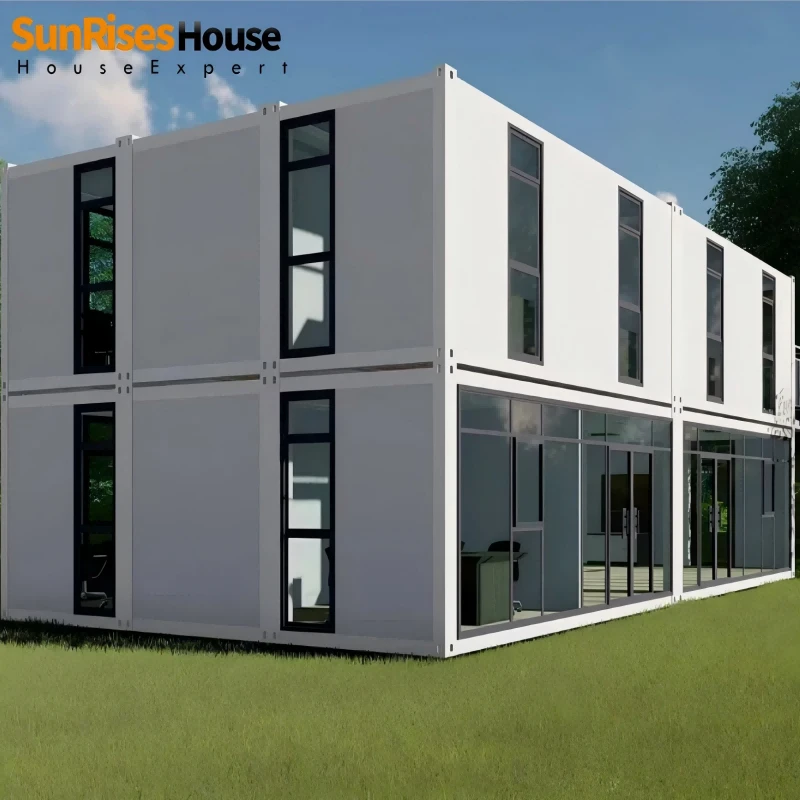

First off, let's get one thing straight: indoor modular offices aren't those rickety portables you see at construction sites that look like they're held together with duct tape and hope. Modern modular offices are built in controlled factory environments, with high-quality materials, insulation, electrical and plumbing that's up to code, and finishes that look just like traditional office space. The best part? They're not one-and-done. That means they're built to be moved, reconfigured, and reused, which directly boosts their resale value. Unlike traditional office buildouts that are nailed down to a wall or floor, modular offices are standalone units-so you can easily disconnect them and take them to a new location, which is a huge plus for businesses that move often.
Now, let's talk about what actually drives resale value. It's not just a random number someone pulls out of thin air. It's based on a few key factors that I see play out every single day with my clients. Let's start with age and condition. Just like a car or a house, an indoor modular office's value drops the older it gets-if it's been beat up, has peeling paint, faulty wiring, or water damage, that's going to tank its resale value. But if you've maintained it regularly (think: checking HVAC systems, patching small dents, keeping the interior clean), it can hold its value way better than you'd expect. I've had clients who used a modular office for 5 years, kept it in great shape, and sold it for 70% of what they originally paid. That's way better than most traditional office furniture, which is often worth pennies on the dollar after a couple of years.
Next up, size and configuration. Modular offices come in all shapes and sizes-from tiny 2-person spaces to large units that can fit 20+ people, plus conference rooms, break rooms, and even storage. The more functional and well-configured a unit is, the higher its resale value. For example, a modular office that's already set up with private offices, a small kitchenette, and a dedicated IT nook is way more valuable than a bare-bones 10x10 box. It's ready to go for the next buyer, who won't have to spend extra time and money adding those features. That's why, when my team designs custom units for clients, we always keep reusability in mind. We've even had clients take a modular office that was originally set up for sales reps and convert it to a customer service hub a couple of years later, which only added to its value when they decided to sell.
Another big one: materials and features. If your modular office has premium finishes-like solid wood cabinets, high-efficiency HVAC, smart lighting, or soundproofing, those add-ons don't just make your office space nicer to work in-they boost resale value. Buyers are willing to pay more for units that are move-in ready with modern, functional features, instead of ones they have to renovate. On the flip side, if you opt for the basic, no-frills model, your resale value will be lower, but that's okay if you only need it for a short time. Also, keep in mind that modular units built with durable, weather-resistant materials (wait, even indoor ones need to hold up if you have to move them temporarily) will hold up better over time, so they'll be worth more when you sell. For example, units with steel frames instead of flimsier aluminum are less likely to get damaged during transport, which makes them more desirable to resellers.
Wait, speaking of moving-mobility is a huge factor in resale value. One of the biggest advantages of modular offices is that they're portable, which means they can be used for multiple projects or businesses. That's a game-changer for industries like construction, energy, or event management that need temporary office space for short-term projects. A modular office that can be easily loaded onto a truck and moved to a new site is way more valuable than a traditional office space that's tied down to a single location. I've seen buyers pay top dollar for modular units that have been barely moved, but even units that have been relocated a couple of times still hold their value- as long as the move was done properly by professional movers who specialize in modular spaces, not just random truck drivers.
Let's also compare modular office resale value to other office options, because that's probably what you're wondering. Traditional office spaces-whether you lease or buy a brick-and-mortar-have almost no resale value if you're leasing, and if you own, you have to deal with selling an entire building, which is a huge hassle and takes months, if not years. Even prefab office buildings that are larger, like warehouses or factory spaces, have lower resale value per square foot than modular offices, because they're less flexible. Wait, there are other modular prefab products that use similar tech, though-like the ones you can check out at Gable Roof Container House, Flat Pack Container Shed, Prefab Factory Building, Modular Factory Offices, and Portable Worker Housing. Those are all part of the same modular ecosystem, and their resale value works on the same principles as indoor offices: functionality, mobility, and condition matter most. For example, a Portable Worker Housing unit that's well-maintained and ready to move will hold its value way better than a shed or a basic container.
Now, what about the numbers? I've crunched a lot of these numbers over the years, so I can give you a rough idea. On average, indoor modular offices have a resale value of 50-80% of their original purchase price, depending on the factors I mentioned earlier. For short-term use-say, 1-2 years-you might even be able to sell it for 75-80% of what you paid, because it's basically like new. For mid-term use (3-5 years), it's around 60-70%, and for longer use (5+ years), it drops to 40-50%. That's way better than, say, office furniture, which usually loses 20-30% of its value in the first year alone. Even compared to leased modular offices-wait, if you lease, you don't build equity, but if you buy, you can build resale value, which is a huge perk.
But wait, there are some factors that can hurt your resale value. Let's be real-nothing is perfect. If you modify your modular office in a permanent way, like knocking down load-bearing walls or building a custom addition that can't be moved, that will hurt resale value, because the next buyer can't easily reuse it. Same with if you don't maintain it-small issues like a leaky roof or faulty wiring can turn off buyers, and even if you fix them, they might think the unit has been neglected. Also, if the unit is an older model with outdated features, like old electrical systems that can't handle modern tech, that will lower its value. That's why working with a reputable supplier is key-they'll help you pick a unit that's built to last, so you don't have to worry about resale later.
So, what can you do to maximize your modular office's resale value when you're ready to sell? Let's break it down into a few simple steps. First, invest in regular maintenance. Just like a car, a modular office needs tune-ups, cleaning, and small repairs every year to stay in good shape. That way, when you go to sell, you can show buyers that the unit has been well-cared for, and you can get a higher price. Second, avoid permanent modifications. If you want to customize your office, do it in a way that's reversible-like adding removable shelves, lighting, or partitions, instead of drilling holes in the frame or walls. Third, keep all documentation. Save receipts for maintenance, delivery, any custom features you added, and the original purchase. Buyers want to see that the unit is safe, compliant, and has a history of care, so having that paperwork handy will make the sale go smoother and get you a better price. Fourth, sell to a modular office reseller instead of trying to sell it on your own. Resellers know the market, can take care of transport and logistics, and often have a network of buyers looking for used units. They'll give you a fair price, and it's way less hassle than listing it on Craigslist or Facebook Marketplace.
Wait, let's talk about who the buyers are for used modular offices, because that affects value too. Most used modular office buyers are small businesses, startups, contractors, nonprofits, or remote teams that don't want to pay for a traditional office lease or buildout. They're looking for affordable, flexible space that they can move as they grow. That means if your modular office is a standard size and configuration, it will have a bigger pool of buyers, which drives up the price. If it's a super custom, one-of-a-kind unit, the pool is smaller, so you might have to sell it for less, because you're targeting a specific type of buyer. That's another reason to go with a standard, functional configuration when you buy-you'll have an easier time reselling it later.
I've seen this play out with a client of mine a couple years back. A local marketing agency bought a 1,200 sq ft modular office with 4 private offices, a conference room, and a break room, for $35,000. They used it for 4 years, kept it clean, replaced the HVAC system once, and added some removable partitions to fit their growing team. When they decided to move to a brick-and-mortar space downtown, they sold it to a construction company that needed a temporary office for a nearby job site. They got $24,500 for it- that's 70% of their original purchase price. That's a huge win, especially when you compare that to if they'd spent $35,000 on a traditional office buildout, which would be worth almost nothing when they moved.
Another example: a startup that used a tiny 200 sq ft modular office for 1 year, then outgrew it. They sold it back to our company for $12,000-they paid $15,000 originally, so that's 80% back. We then refurbished it a little, added some new flooring and lighting, and sold it to a small law firm for $14,000 a few months later. That's the beauty of modular- these units are in high demand, because they're flexible and affordable.
Now, I know what some of you are thinking: "Is modular office resale value even worth it?" For businesses that need office space for more than a year or two, absolutely. If you're only going to need it for a few months, renting is probably the better option, since you don't have to worry about resale at all. But if you're going to use it for 3+ years, buying a modular office and selling it later is a smart financial move, because you get a chunk of your money back, and you don't have to deal with the hassle of a traditional office's low resale value. Also, let's not forget the other benefits-modular offices are energy-efficient, have better air quality than some traditional spaces, and are customizable, so you can adapt them to your needs as your business grows, which adds to their overall value.
If you're thinking about buying an indoor modular office, or you already have one and are thinking about reselling, don't hesitate to reach out. My team and I can help you figure out the right size, configuration, and features to maximize your resale value later. We also work with modular units across the board-including the ones I mentioned earlier, like those Gable Roof Container House, Flat Pack Container Shed, Prefab Factory Building, Modular Factory Offices, and Portable Worker Housing lines, so we know all about how those products hold their value too. Whether you're a small business looking for your first office, a contractor needing temporary space, or a larger company looking to downsize, we can help you navigate the resale value and make the best choice for your needs.
At the end of the day, indoor modular offices aren't just a short-term space solution-they're an investment that holds value, is flexible, and can adapt to your business's needs. Their resale value is one of their biggest advantages over traditional office space, and when you choose a reputable supplier and maintain your unit properly, you can count on getting a good return when you're ready to move on. So if you're ready to explore your options, get in touch with us to chat through your needs and find a modular office that works for you, with resale value that makes sense for your budget and goals.
References:
- Modular Building Institute. (2023). Resale Value Analysis of Modular Office Structures. Retrieved from MBI Industry Reports
- U.S. Small Business Administration. (2022). Alternative Office Solutions: Cost and Value Comparison. Retrieved from SBA Small Business Facilities Guides
- National Association of Home Builders. (2021). Prefabricated Building Lifecycle and Reusability Metrics. Retrieved from NAHB Research Center Publications
- Construction Exec Magazine. (2023). Temporary Office Space Resale Trends for 2023. Retrieved from Construction Exec Digital Archives