

As a supplier of Nanofiltration Water Treatment solutions, I often encounter inquiries about the energy requirements of this technology. Nanofiltration (NF) is a membrane - based water treatment process that lies between ultrafiltration and reverse osmosis in terms of pore size and separation characteristics. It is widely used for removing organic compounds, divalent ions, and some monovalent ions from water, making it suitable for various applications such as water softening, desalination of brackish water, and purification of industrial wastewater.
Understanding the Basics of Nanofiltration Energy Consumption
The energy requirements of nanofiltration water treatment are mainly determined by several factors. Firstly, the pressure needed to drive the water through the nanofiltration membrane is a significant contributor. Unlike simple filtration processes, nanofiltration requires a certain amount of hydraulic pressure to overcome the osmotic pressure and the resistance of the membrane. The osmotic pressure is related to the concentration of solutes in the feed water. Higher solute concentrations result in higher osmotic pressures, which in turn demand more energy to force the water through the membrane.
Secondly, the membrane's permeability plays a crucial role. Membranes with higher permeability allow water to pass through more easily, reducing the energy needed to achieve a certain flow rate. The quality and characteristics of the membrane, such as its pore size distribution, surface charge, and thickness, all affect its permeability. For example, a well - designed nanofiltration membrane with uniform pore sizes and an appropriate surface charge can enhance the separation efficiency while minimizing energy consumption.
Another factor is the recovery rate. The recovery rate is defined as the ratio of the permeate (treated water) volume to the feed water volume. A higher recovery rate means more water is being treated and recovered, but it also increases the concentration of solutes in the remaining feed water. This leads to an increase in osmotic pressure and membrane fouling potential, which may require more energy to maintain the desired flow rate and separation efficiency.
Energy - Saving Strategies in Nanofiltration
To reduce the energy requirements of nanofiltration water treatment, several strategies can be employed. One approach is to optimize the pretreatment process. By removing large particles, colloids, and organic matter before the water enters the nanofiltration system, the risk of membrane fouling can be significantly reduced. Fouled membranes have lower permeability, which increases the pressure required to maintain the flow rate. For instance, using a 2880 Ultrafiltration Membrane Module as a pretreatment step can effectively remove suspended solids and macromolecules, protecting the nanofiltration membrane and reducing energy consumption in the long run.
Another strategy is to select the appropriate membrane with high permeability and selectivity. New membrane materials and manufacturing technologies are constantly emerging, offering better performance in terms of energy efficiency. For example, the Silicon Carbide Ceramic Membrane has shown excellent chemical stability, high mechanical strength, and relatively high permeability, which can contribute to energy savings in nanofiltration systems.
Moreover, the system design and operation parameters can be optimized. By adjusting the pressure, flow rate, and recovery rate based on the characteristics of the feed water, the energy consumption can be minimized. For example, in some cases, operating the nanofiltration system at a slightly lower recovery rate can reduce the osmotic pressure and membrane fouling, resulting in overall energy savings.
Comparison with Other Water Treatment Technologies
When comparing nanofiltration with other water treatment technologies, such as reverse osmosis (RO) and ultrafiltration (UF), its energy requirements fall in between. Reverse osmosis is a more stringent separation process that can remove almost all dissolved salts and organic compounds. However, it requires much higher pressures, typically in the range of 15 - 100 bar, due to its very small pore size and the need to overcome high osmotic pressures. This results in relatively high energy consumption.
On the other hand, ultrafiltration operates at lower pressures, usually in the range of 1 - 10 bar, because its pore size is larger and it mainly removes larger particles, colloids, and some macromolecules. While UF consumes less energy than nanofiltration and reverse osmosis, it has limited ability to remove small ions and low - molecular - weight organic compounds.
Nanofiltration strikes a balance between the two. It can remove a significant amount of divalent ions and some organic compounds at relatively lower pressures compared to reverse osmosis, making it a more energy - efficient option for certain applications, such as water softening and partial desalination.

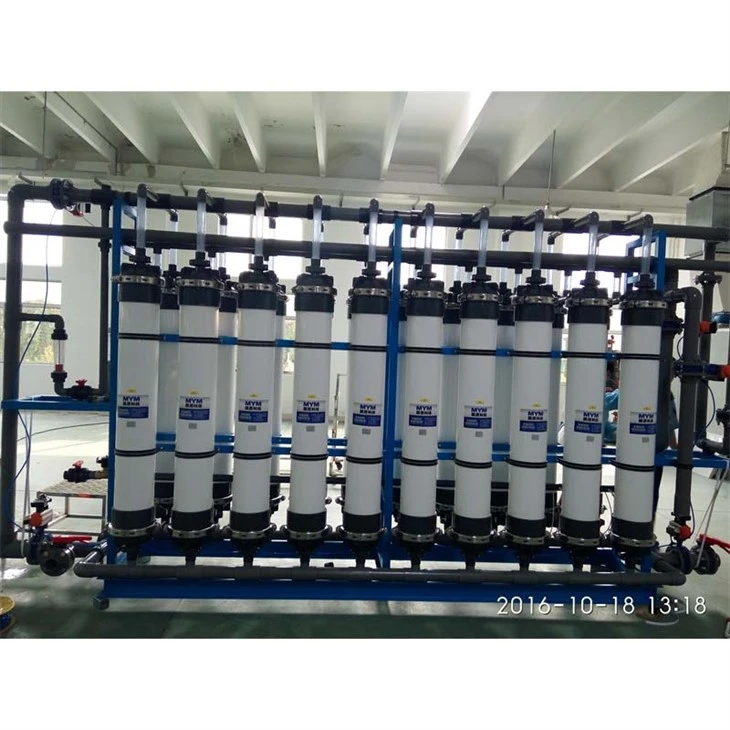
Case Studies: Energy Efficiency in Real - World Applications
In a recent industrial water treatment project, a food processing plant was facing challenges in treating its wastewater. The wastewater contained high levels of organic matter and divalent ions, which needed to be removed to meet the discharge standards. A nanofiltration system was installed, and through careful optimization of the pretreatment process using an ultrafiltration membrane module and selection of a high - performance nanofiltration membrane, the energy consumption was significantly reduced.
The plant initially considered a reverse osmosis system, but after a detailed energy analysis, it was found that nanofiltration could achieve the required treatment goals with much lower energy input. By adjusting the operating parameters, such as the pressure and recovery rate, the system was able to maintain a stable performance while minimizing energy costs.
Future Trends in Reducing Energy Requirements
The future of nanofiltration water treatment lies in the development of more energy - efficient membranes and systems. Researchers are exploring new membrane materials, such as graphene - based membranes and biomimetic membranes, which have the potential to offer extremely high permeability and selectivity. These new materials could revolutionize the nanofiltration industry by significantly reducing energy consumption.
In addition, the integration of renewable energy sources, such as solar and wind power, into nanofiltration systems is becoming an increasingly attractive option. By using renewable energy, the environmental impact of the water treatment process can be further reduced, and the long - term operating costs can be lowered.
Conclusion
In conclusion, the energy requirements of nanofiltration water treatment are influenced by multiple factors, including pressure, membrane permeability, and recovery rate. As a Nanofiltration Water Treatment supplier, we are committed to providing our customers with energy - efficient solutions. Through the optimization of pretreatment processes, selection of high - performance membranes, and careful system design, we can help our clients achieve significant energy savings while ensuring high - quality water treatment.
If you are interested in our nanofiltration water treatment solutions or want to discuss your specific water treatment needs, please feel free to contact us for procurement and further洽谈. We look forward to working with you to develop the most suitable and energy - efficient water treatment solutions for your application.
References
- Baker, R. W. (2004). Membrane Technology and Applications. Wiley.
- Cheryan, M. (1998). Ultrafiltration and Microfiltration Handbook. Technomic Publishing.
- Strathmann, H. (2010). Synthetic Membranes: Science, Engineering and Applications. Elsevier.