

Prefab Housing for Mining Camps
Mining projects are usually located in remote and harsh environments. Traditional construction is not only expensive but also slow and difficult to manage. In this context, prefab housing has become one of the most efficient and practical solutions for building mining camps.
Prefab housing offers fast deployment, flexible layouts, and cost control, making it highly suitable for mining operations that require quick setup and long-term use.
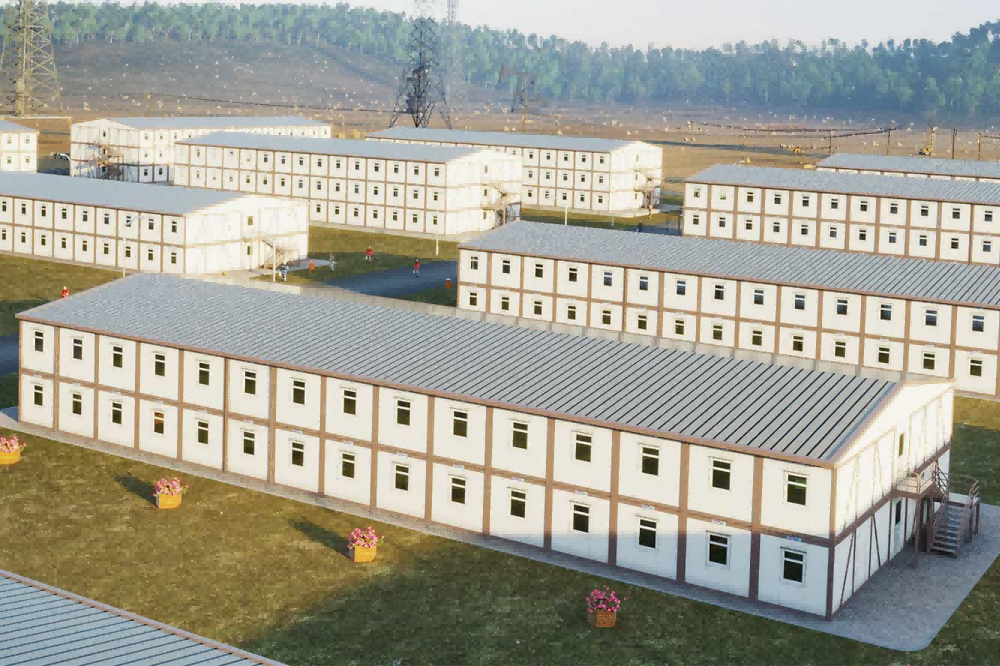
1. What Is Prefab Housing for Mining Camps?
Prefab housing refers to modular buildings that are manufactured in factories and then transported to the mining site for quick assembly.
In mining camps, these structures are commonly used for:
- Worker dormitories
- Office and management buildings
- Dining halls and kitchens
- Bathrooms and shower facilities
- Medical rooms
- Storage and equipment rooms
- Recreation areas
The goal is to quickly create a fully functional living and working environment.
2. Why Mining Projects Prefer Prefab Housing
Mining sites are usually far from cities, which makes traditional construction slow and costly. Prefab housing helps solve these challenges effectively.
- Fast Installation:Most components are prefabricated in the factory. On-site installation takes days instead of months.
- Cost Efficiency:Reduced on-site labor and shorter construction time significantly lower overall project costs.
- Mobility and Reusability:Mining operations often relocate. Prefab housing can be dismantled, moved, and reused multiple times.
- Durable in Harsh Environments:High-quality steel structures and insulated panels allow prefab housing to withstand extreme conditions such as heat, cold, strong winds, and dust.
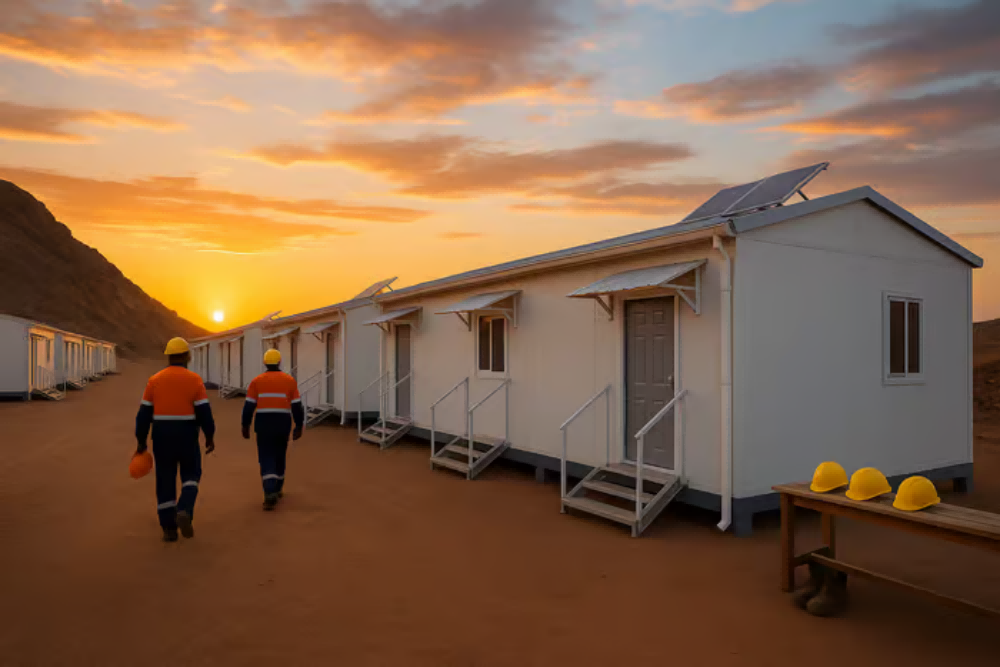
3. Common Types of Prefab Housing Used in Mining Camps
Depending on project scale and budget, common solutions include:
- Flat pack container houses
- Expandable container houses
- Folding container houses
- Modular steel structures
- Sandwich panel prefabricated buildings
Among these, flat pack container houses are widely used due to their balance of cost, durability, and transportation efficiency.
4. Key Design Considerations
When planning prefab housing for mining camps, several factors must be considered:
Site Conditions:Remote locations often require special foundation design and logistics planning.
Capacity Requirements:The number of workers directly determines the size and layout of the camp.
Climate Adaptation:Insulation, ventilation, heating, and cooling systems must be designed according to local weather conditions.
Safety Standards:Mining camps must comply with strict safety regulations, including fire resistance and structural stability.
5. Advantages Over Traditional Construction
Prefab housing offers clear advantages compared to conventional building methods:
- Short construction time
- Lower labor costs
- Minimal on-site disruption
- High scalability and flexibility
- Easy maintenance and replacement
- More environmentally friendly construction
These benefits make prefab housing a preferred solution for mining companies worldwide.
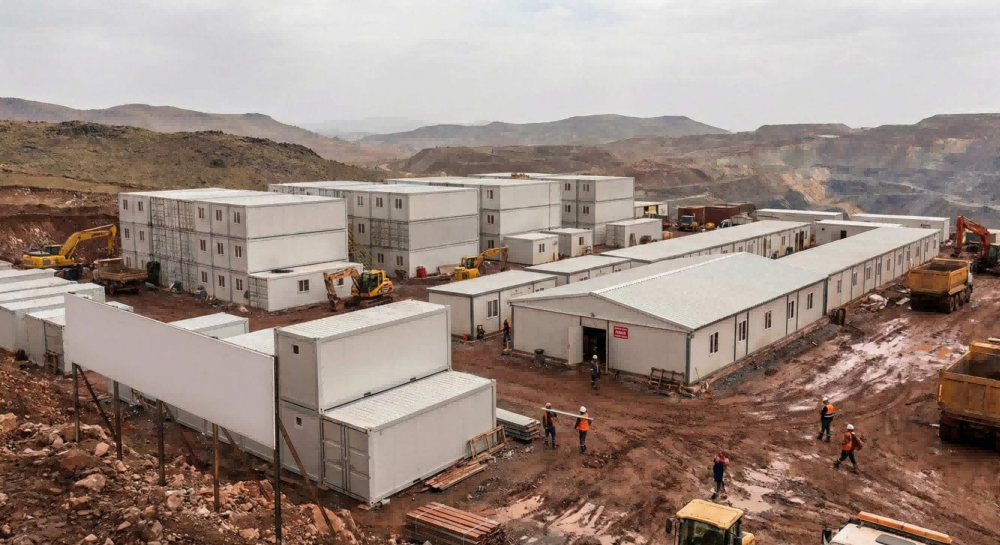
Conclusion
Prefab housing has become an essential solution for modern mining camp construction. It enables fast, flexible, and cost-effective development of complete living and working environments in remote locations.
For mining companies, using prefab housing means:
- Faster project startup
- Better living conditions for workers
- Lower long-term operational costs
- Greater mobility and adaptability
As mining projects continue expanding into more remote regions, prefab housing will play an increasingly important role in supporting efficient and sustainable operations.
If you are planning to build practical and economical prefab housing for your mining projects, please feel free to contact us for tailored plans and free official quotations.
Visit our official website for more product details:https://www.sunrises-housing.com/